

Last updated: November 8, 2026
Quick Summary
To wash table linen without shrinkage, follow the care label and maintain a temperature of 30 °C to 40 °C: 40 °C for white cotton and 30 °C for colored and delicate fabrics. Use a mild detergent without bleach and a delicate wash cycle with a low spin speed, and air-dry or tumble-dry on low.
- Never wash coated table linen above 40 °C, as the coating can be irreparably damaged.
- Hang wet table linen up immediately, straight and without wringing, to limit shrinkage.
- Iron slightly damp linen at a medium temperature and iron in the direction of the weave.
- Measure a new tablecloth before and after the first wash and record the dimensions.
- Choose one series per table type so that dimensions, color, and shrinkage remain predictable.
Table of Contents
- Table linen care instructions: the basis for shrinkage-free maintenance
- What temperature to wash table linen at without shrinkage
- Drying table linen without shrinkage: air, machine, and timing
- Ironing table linen and preventing creases as a professional
- Measuring and controlling shrinkage at a business level
- Choose the right table linen for your washing process
- Frequently Asked Questions
Table linen care instructions: the basis for shrinkage-free maintenance
Washing table linen without shrinkage starts with one habit: read the care label before the first tablecloth goes into the machine. Water that is too hot and an overly aggressive spin cycle are common causes of shrinkage, not poor fabric.
Cotton and linen shrink because the fibers are woven under tension. Warm water and movement release that tension. A mild detergent without bleach keeps the color and fiber intact. Also sort by color and wash new items separately the first time.
- Read the care label of each item
- Sort by color and fabric type
- Choose a mild, liquid detergent
- Skip fabric softener and optical brighteners
- Wash new pieces separately the first time
Cotton is breathable, strong, and suitable for professional washing, such as the White Napkins 53x53cm Cotton RAO - Treb Luxe. This makes the basic rule simple: follow the label and the fabric will remain presentable for years.

White Napkins 53x53cm Cotton RAO - Treb Luxe
What temperature to wash table linen at without shrinkage
For much of the table linen, a temperature of 30 °C to 40 °C is appropriate. Choose 40 °C for white cotton and 30 °C for colored and delicate fabrics. Always follow the care label.
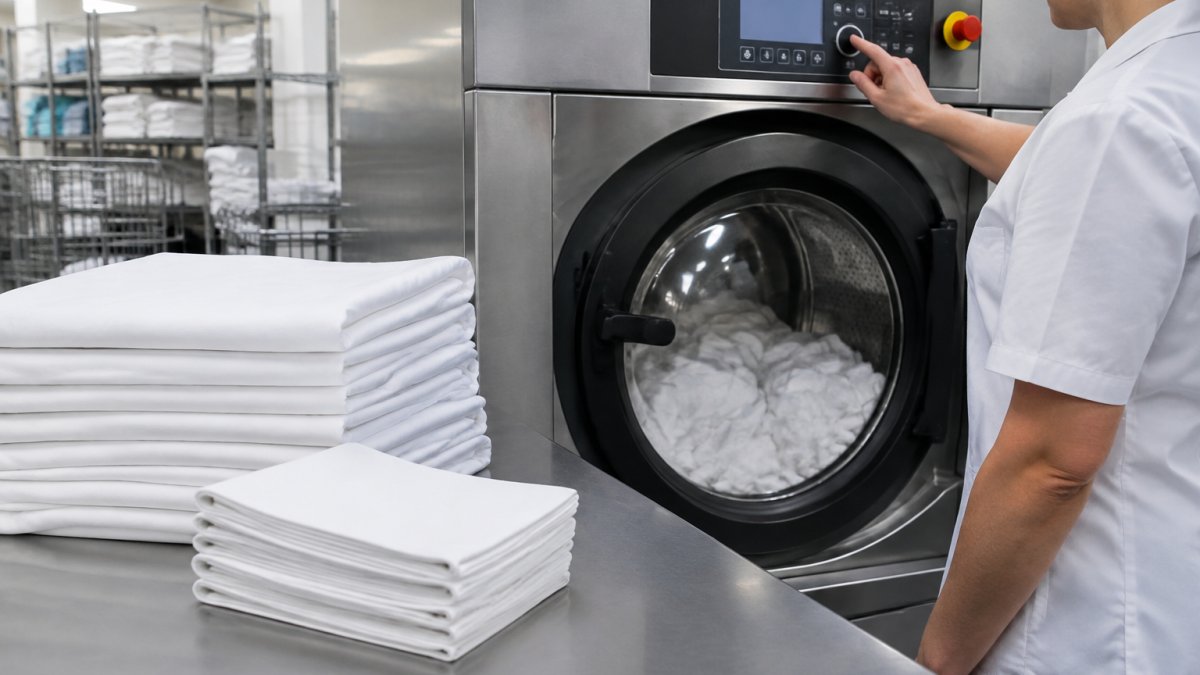
Step-by-step guide for washing white table linen at the correct temperature in a professional laundry.
Temperature is the biggest shrinkage factor. Hot water opens the fibers and lets them contract when drying. A delicate wash cycle with a low spin speed protects the weave structure. Loading matters too: an overly full drum causes creases, while an overly empty drum causes extra movement and wear.
- White cotton: 40 °C, normal cycle
- Colored linen: 30 °C, delicate wash
- Linen blends and damask: 30 °C, low spin speed
- Coated table linen: lukewarm water, short cycle
Not sure? Wash one piece on the lowest setting and measure it afterward. This way you will know exactly how your fabric reacts before the entire stock goes through.
Temperature per material and finish
Not all table linen reacts the same way to heat. Pure linen and cotton shrink more than a linen blend, and damask with woven satin stripes requires a lower temperature to preserve the sheen. Coated table linen has a protective layer that can harden or peel at high temperatures. Therefore, match the temperature to the fiber and the finish, not just the color.
- Pure linen: 30 °C, delicate wash, low spin speed
- Cotton: 40 °C, normal cycle
- Linen blend: 30 °C, delicate wash
- Damask: 30 °C, low spin speed, no bleach
- Coated table linen: lukewarm water, short cycle, no fabric softener
A common mistake is washing white cotton at 60 °C by default to remove stains. This kills bacteria, but also causes measurable shrinkage and fiber wear. For businesses that consider hygiene important, it is wiser to increase the temperature only when the care label allows it and to pre-treat stains first.
Hygiene versus shrinkage: the trade-off per application
In the hospitality industry and at events, cleanliness carries significant weight, but fiber protection determines how long the table linen will last. A slightly higher temperature can kill more bacteria, but can also cause more shrinkage and loss of sheen. Choose a temperature for each application that suits the fabric and the care label. Use a mild, liquid detergent and check that it is suitable for delicate fabrics.
Note: never wash coated table linen on a cycle above 40 °C, as the coating can be irreparably damaged.
Match the washing temperature to the fiber and the finish, not just the color.
Material or finish |
Temperature |
Cycle or point of attention |
|---|---|---|
White cotton |
40 °C |
Normal cycle |
Colored linen |
30 °C |
Delicate wash |
Pure linen |
30 °C |
Delicate wash, low spin speed |
Linen blend |
30 °C |
Delicate wash |
Damask |
30 °C |
Low spin speed, no bleach |
Coated table linen |
Lukewarm water |
Short cycle, no fabric softener |
Washing temperature per material or finish
Drying table linen without shrinkage: air, machine, and timing
Air-drying is a gentle way to limit shrinkage. Hang wet table linen up immediately, straight and without wringing. This allows the fibers to dry evenly and keeps creases to a minimum.
A dryer can be used, but keep the spin speed and heat low. Remove the linen while it is still slightly damp. Drying for too long and at too high a temperature causes fiber damage and shrinkage that cannot be undone.
- Hang wet, straight and taut
- Avoid direct heat from the heater
- Use the dryer only on low
- Remove early from the dryer and iron immediately
For larger batches, a drying cabinet with moisture measurement can help to stop at the right time.
Ironing table linen and preventing creases as a professional
Limiting creases starts with washing, not with the iron. An overly full drum and a high spin speed cause sharp folds that pull deep into the fiber. Iron slightly damp linen at a medium temperature, with the grain.
- Iron damp, not bone dry
- Work with the direction of the weave
- Use steam for stubborn creases
- Fold neatly immediately after ironing
For damask and delicate fabrics, an ironing cloth works well. This preserves the sheen and prevents the fiber from burning.
Measuring and controlling shrinkage at a business level
Measuring shrinkage provides insight into the actual behavior of your linen. Measure a new tablecloth before and after the first wash, record the dimensions, and repeat this with every new batch. This way you build up your own shrinkage profile per fabric type.
- Measure length and width before the first wash
- Wash according to the label and measure again
- Record the difference per item and supplier
- Adjust order dimensions based on the measured shrinkage percentage
A large tablecloth in a fixed size clearly shows what size you still need after shrinkage. For example, view the Tablecloths White 132x230cm Treb Sp to determine which final size suits your tables after multiple washes.
A reproducible measurement method for tablecloths
Lay the tablecloth flat on a level table, without tension and without creases. Measure the length and the width with a measuring tape at three fixed points: along the hem, in the middle, and diagonally. Record the dimensions in centimeters and repeat the measurement after every wash under the same conditions. This prevents differences from being caused by measurement errors instead of shrinkage.
- Measure before the first wash: length, width, and diagonal
- Wash according to the label and dry in the same way
- Measure again at the same three points
- Calculate the difference in centimeters and as a percentage of the original size
You calculate the shrinkage percentage by dividing the difference in length by the original length and multiplying by 100. A shrinkage of 2 cm on a 230 cm tablecloth is less than one percent; a shrinkage of 6 cm is over 2.5 percent.
Shrinkage percentages per fabric type and batch
Pure linen and cotton usually shrink more than a linen blend, and damask can vary depending on the weave. Keep a separate profile for each fabric type: record the average shrinkage after the first wash and after five washes. This will show you whether a batch behaves normally or deviates.
- Pure linen: measure after the first wash and after five washes
- Cotton: same, with separate profiles for white and colored
- Linen blend: check that the blend does not shrink faster than expected
- Damask: also measure the shine and texture after washing
For intensive use, it pays to weigh hygiene and shrinkage together. A slightly higher temperature kills more bacteria, but costs more shrinkage. Choose per application: 40 °C for white cotton in the operating room, 30 °C for colored and delicate fabrics.
Note: always measure in the same way and under the same conditions, otherwise a difference in centimeters says nothing about the actual shrinkage.
Choose the right table linen for your washing process
The best fabric is the fabric that can withstand your washing process. Cotton and linen blends tolerate professional washing well, damask requires more care and coated table linen you clean with a short, lukewarm program. Match the choice to how often you wash, not just how it looks.
A table protector protects the table linen and influences how you set up the washing process. View the Table Protector Per Meter And 140cm Wide to include the layer under the cloth in your planning. If you want a concrete example of linen that can withstand the washing process, look at the White Tablecloths 105x105cm With Woven Satin Band - Treb Classic.


Our advice: choose one series per table type and stick to it. This keeps sizes, color and shrinkage behavior predictable across the entire inventory.
Maintaining shrink-free table linen revolves around three things: following the right wash label, measuring what your fabric does and keeping the temperature low. At Treb Horecalinnen you order table linen directly from the manufacturer, from stock, with personal advice on your choice. This way you build an inventory that lasts for years. View our assortment and choose the series that fits your washing process.
Frequently Asked Questions
At what temperature can you wash table linen without it shrinking?
For cotton table linen, 40 °C is a common temperature for daily maintenance, provided the wash label allows it. If you want to tackle stubborn stains, choose 60 °C occasionally, but keep in mind that repeated hot washing makes the fibers shrink faster. For finer linen blends or coated table linen, 30 °C with a delicate wash program is the best choice. Always consult the wash label of your table linen to see at what temperature is recommended.
How do you prevent linen tablecloths from shrinking in the wash?
Wash tablecloths at a low temperature (30-40 °C) and use a mild liquid detergent. Follow the wash label for spinning and drying. Hang the table linen wet to air dry; this keeps the fibers relaxed and limits shrinkage. Wash new items separately at 30 °C first to test for any residual shrinkage.
Can you make shrunken linen table linen larger again?
Shrinkage is often permanent because the fibers contract. You can make the table linen more supple again by hanging it damp after washing and gently pulling it into shape. For the future, you prevent further shrinkage by strictly following the table linen wash instructions and avoiding high temperatures.
What detergent is suitable for linen table linen?
Use a mild liquid detergent that is suitable for delicate fabrics and natural fibers. Pay attention to detergents with optical brighteners or bleach, and check if the wash label allows it. Test each product on an inconspicuous spot first.


